
Political Biography
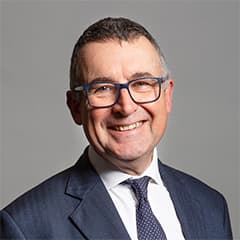
Bernard Jenkin has sat in the Commons since 1992, for a succession of Essex seats, and is one of the longest serving Eurosceptics in British politics, the son of a Thatcher cabinet minister who made his own name rebelling against his party's leaders over Europe. Conviction he has never lacked. Consistency of standard is another matter.
His Euroscepticism is the real and unwavering thread. He was one of the Maastricht rebels who tormented John Major in the early 1990s, chaired the steering group of the European Research Group, and campaigned hard for Leave in 2016. Whatever one thinks of the cause, he believed in it for thirty years and pursued it without flinching. His other contribution has been to scrutiny: he chaired the Public Administration and Constitutional Affairs Committee for nearly a decade and then the Liaison Committee, which oversees the prime minister's appearances, a substantial parliamentary career built on the back benches rather than in government, where he never served.
The standards are where the story turns. In 2009 the official auditor of the expenses scandal recommended Jenkin repay more than sixty thousand pounds, among the largest sums sought from any MP, over rent he had claimed on a property owned by his sister-in-law. The figure was later reduced on appeal, but the arrangement, public money flowing to a family member for his second home, was exactly the kind of thing that corroded trust in Parliament.
The sharper episode came in 2023. Jenkin sat on the Privileges Committee that found Boris Johnson had deliberately misled Parliament over lockdown gatherings, and while it was doing so it emerged that Jenkin had himself attended a lockdown drinks event, a birthday gathering for the deputy speaker in December 2020, when the rules he was helping to judge Johnson against were in force. Johnson called it outrageous hypocrisy and demanded he resign. Jenkin was later cleared by the standards commissioner of breaching the rules, but the picture, a man sitting in judgement on lockdown breaches while having attended a lockdown event, was not one that did the committee's authority any favours.
To his credit, he is capable of changing his mind on more than procedure. Having earlier opposed gay equality measures, he voted for same sex marriage in 2013 and explained, as a practising Anglican, why he had come to support it.
In 2024 he held Harwich and North Essex by just 1,162 votes, Labour second, his majority cut from twenty thousand. He was knighted in 2018.
Jenkin is a conviction politician of real longevity and a serious committee operator, and on Europe at least no one could accuse him of opportunism. He is also a study in the gap between the standards a politician applies to others and the ones he applies to himself, an MP who built a reputation policing the conduct of government while his own record, on expenses and on lockdown, would not survive the same scrutiny. The conviction is genuine. The consistency is selective.