
Political Biography
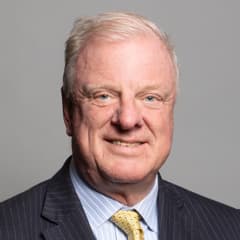
Edward Leigh has been MP for Gainsborough since 1983 and is now Father of the House, the longest continuously serving member of the Commons, the title earned not by achievement but by sheer endurance through more than forty years and ten general elections. He has held it for less than two years. He has been refusing to vote with his leaders for considerably longer.
The career began with promise. A barrister and a former private office secretary to Margaret Thatcher in opposition, Leigh was made a junior minister at the Department of Trade and Industry in 1990, then sacked by John Major in May 1993 for organising against the Maastricht Treaty among his ministerial colleagues. Major's celebrated and unguarded reference to bastards in his cabinet was understood at the time to be aimed at the Eurosceptic ministers he had just dismissed. Leigh has called himself a mini bastard ever since, and the joke is also a confession of where the rest of his career went, which is to say nowhere near government.
He has done one substantial piece of work since. As chairman of the Public Accounts Committee from 2001 to 2010 he ran the most consequential scrutiny committee in the Commons through a period that produced reports on the Millennium Dome, MoD procurement, the loss of millions of child benefit records, and dozens of other failures, the kind of detailed examination of public spending that has saved governments from themselves more often than they will admit. He was knighted for it in 2013.
The rest of the record is a social conservative one, pursued with persistence over decades and on the losing side of almost every battle. A devout Catholic, he opposed the repeal of Section 28, voted against civil partnerships and tabled what its supporters called a wrecking amendment to extend the rights to siblings, voted against the legalisation of same sex marriage, and has voted consistently against the liberalisation of abortion access. In November 2020 he signed an open letter accusing the National Trust of being coloured by cultural Marxist dogma over its review of its properties' connections to slavery and colonialism. He has been the country's most reliable parliamentary voice for an older, harder Conservatism that British politics has long since left behind, and he has held that ground for longer than almost anyone.
In 2024 he held Gainsborough with a majority of 3,532, Labour in second, the once thumping rural seat halved by Reform's surge into third. He became Father of the House when the Conservatives lost their majority.
Leigh is a serious parliamentarian, a chairman of real scrutinising power and a politician of conviction in a chamber that tends to reward neither, and the Public Accounts work was a genuine service. He is also the embodiment of a strain of Conservatism that the country, on the things he most cares about, has steadily declined to follow, an MP whose longest period in office was the one he never returned to. The conviction is undeniable. So is the price he has paid for never having compromised it.