Scotland Office
Represents Scotland in Westminster and Westminster in Scotland — in roughly that order on Mondays, and the other order on Tuesdays.
The Scotland Office is one of the smallest departments in Whitehall and one of the most constitutionally significant. It does not run schools, hospitals, police or transport. Those are devolved to the Scottish Government and the Scottish Parliament. What the Scotland Office does is manage the financial and constitutional relationship between Edinburgh and London, oversee the Barnett formula that determines Scotland's share of UK public spending, and represent Scotland's interests within the UK government. Its direct budget is modest. The fiscal architecture it manages is enormous.
Under the Barnett formula, the Scottish Government receives a population based share of changes in UK departmental spending on devolved areas. Scotland's population share sits just below 10 percent. The most recent Government Expenditure and Revenue Scotland figures, for 2024/25, show a net fiscal transfer of £2,578 per person in Scotland above the UK average. A funding floor guarantees that Scotland's block grant per head will not fall below 124 percent of England's. The UK government provided an additional £2.9 billion per year on average through the Barnett formula in the most recent Spending Review, following a £4.9 billion increase for 2024/25 and 2025/26. Around 50 percent of the Scottish Government's funds are now raised directly in Scotland through devolved taxes. The other half comes from Westminster. That fiscal relationship is the single most important thing the Scotland Office manages, and it is the reason the constitutional debate is never purely about identity. It is also about money.
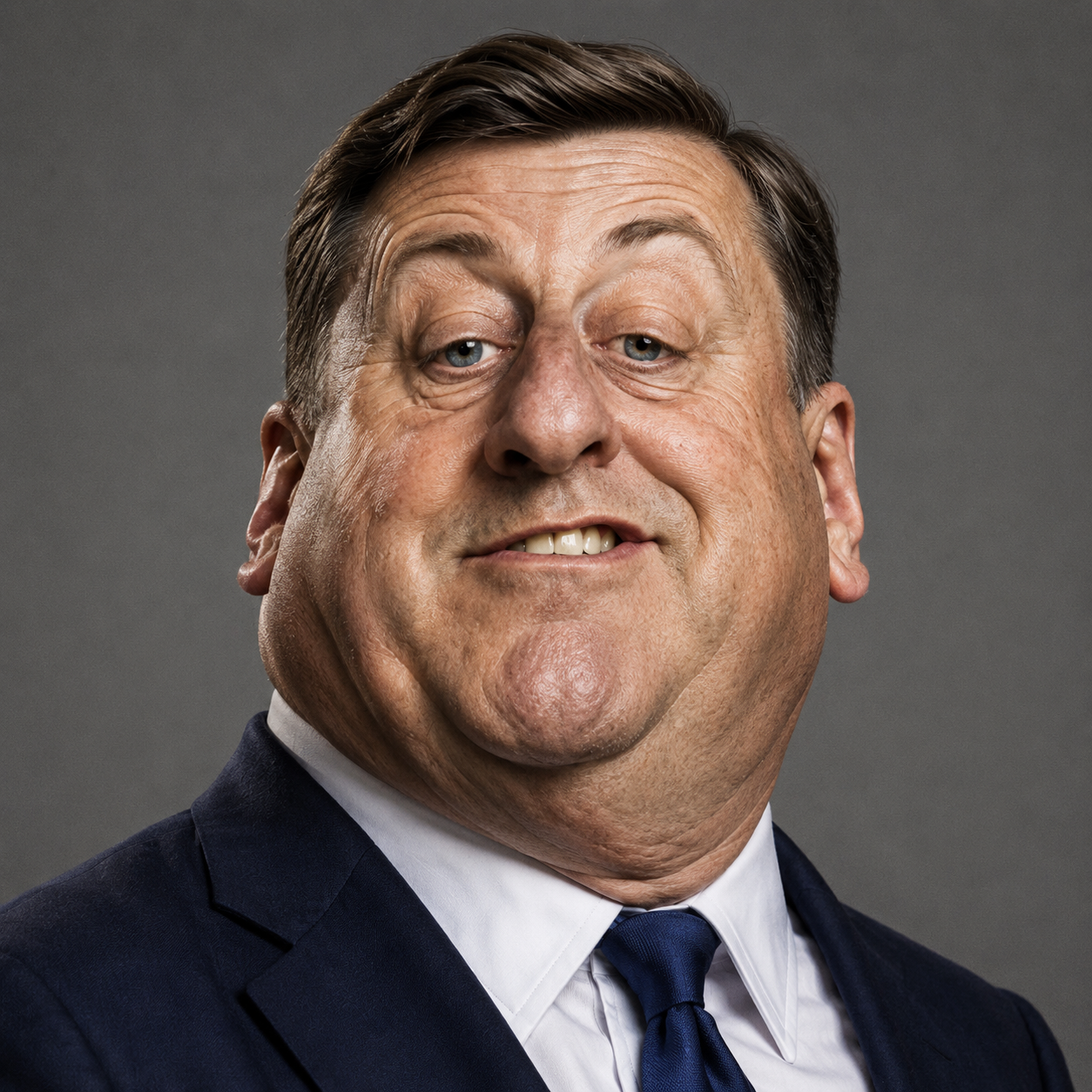
Setting aside Danny Alexander, who held the office for seventeen days in May 2010 before moving to the Treasury, five Secretaries of State for Scotland have served since 2010: Michael Moore, Alistair Carmichael, David Mundell, Alister Jack and Ian Murray. That is notably more stable than almost any other department, and the stability is partly explained by the nature of the role. It is not a brief that generates daily headlines or constant policy churn. It is a watching brief, a relationship management role that demands political judgement more than legislative output.
Moore and Carmichael served as Liberal Democrats in the coalition government. Carmichael was later found by an election court to have made a false statement in connection with a leaked memo during the 2015 campaign, a finding that damaged his reputation even though the court allowed him to keep his seat. Mundell became the first Conservative Secretary of State for Scotland since Michael Forsyth in 1997 when appointed in 2015, reflecting how far the party had fallen north of the border before its partial recovery under Ruth Davidson. Jack served from 2019 to 2024 under three Prime Ministers before receiving a peerage. Murray, Labour's sole Scottish MP for much of the 2015 to 2024 period, took the role after Labour's 2024 victory. His appointment carried the weight of Labour's Scottish recovery: a party that had once dominated Scotland, was nearly destroyed by the SNP surge, and is now rebuilding from a fragile base.
The 2014 independence referendum produced a 55 to 45 percent vote to remain in the United Kingdom. The Scotland Office and its ministers played a central role in the campaign. The result was decisive but not conclusive. Support for independence has remained substantial, typically polling between 45 and 50 percent in the years since. The constitutional question has not gone away. It has simply stopped producing referendums.
Brexit complicated the relationship further. Scotland voted 62 percent to remain in the EU. Being taken out of the European Union against the expressed preference of Scottish voters became one of the SNP's most effective arguments for independence. The Scotland Office was left defending the Union while also implementing a policy that had weakened the Union's appeal in Scotland. That tension has never been fully resolved.
The department can point to genuine achievements. Scotland remains part of the United Kingdom. The fiscal framework delivers substantial financial support. Cross border cooperation continues across defence, energy, trade and foreign affairs. The block grant floor provides a financial guarantee that no other part of the UK receives in the same form. Murray's appointment signals Labour's intent to rebuild a constructive relationship with the Scottish Government after years of Conservative and SNP antagonism.
The deeper question is whether maintaining the relationship is enough. The Scotland Office was created to strengthen Scotland's place within the Union. After more than twenty five years of devolution, an independence referendum, Brexit and sustained political division, the constitutional debate remains unresolved. Support for independence has not collapsed. Trust between Edinburgh and London has not been rebuilt to pre referendum levels. The fiscal transfer is substantial, but the emotional case for the Union is harder to quantify and harder to win. The Scotland Office manages the mechanics of the relationship. Whether it has made the case for the relationship itself is less clear. Five Secretaries of State in sixteen years have each tried. The polling suggests the argument is being held, not won.
Department Staff
Ministers
Budget · 2025/26
The UK government's interface with Holyrood. £16 million for staff and office costs. The Scottish Government itself receives a separate block grant of £29.9 billion. The Office of the Advocate General for Scotland (the UK government's law officer for Scots law) has a tiny separate budget; see advocate-general.